
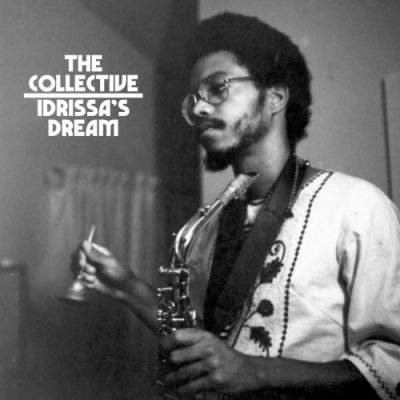
Artist: The Collective
Album: Idrissa’s Dream
Label: Strut Records
Year Of Release: 2022
Format: FLAC (tracks)
Tracklist:
01 – The Shepherd’s Tune (12:56)
02 – Idrissa’s Dream Part 1 (13:05)
03 – Idrissa’s Dream Part 2 (15:06)
04 – Black Queen (10:40)
05 – Beginning Roots Part 1 (19:33)
06 – Beginning Roots Part 2 (10:53)
07 – Veil of Solitude (7:47)
08 – Mad and Black (6:39)
Strut continues their work from the archives of Idris Ackamoor & The Pyramids with a first ever vinyl release of Ackamoor’s debut avant-garde / Afro-jazz recordings from 1971 with The Collective, based out of Yellow Springs, Ohio.
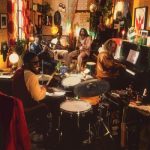
The group was formed after Ackamoor had returned to Antioch from a spell in L.A. under the wing of influential saxophonist Charles Tyler. Pianist Lester Knibbs had been appointed to the Antioch college music department as an assistant professor and had followed a similar path to avant-garde pioneer, Cecil Taylor. “They both came from the classical tradition,” explains Ackamoor, “but also understood jazz and avant-garde improvisation.” Ackamoor and Knibbs started as a duet before Ackamoor met three musicians from Wright-Patterson Air Force base near Dayton. Ackamoor continues, “They would come to Yellow Springs because they could find marijuana there. They were called ‘the three Steves’: Steve Maniscoso, an Italian, Steve Rumboat, a white American and Oakland Steve, a black musician playing flute. Oakland Steve left the air force and then Margaux Simmons arrived – that is the quintet featured on these recordings. You also hear a vocalist called Peggy Pettitt, another Antioch student who became quite famous in movies; she starred in the film Black Girl soon afterwards in 1972.
This concert is the only professional recording of The Collective from a performance at Kelly Hall in August 1971. “After this, I think the Steves went back to Wright-Patterson,” continues Ackamoor, “and The Collective just naturally evolved and transitioned into the Pyramids. I felt like The Collective was my birth as a composer; we created such a tapestry of sound because Lester had the talent to play enormous arpeggios and colours on the piano, both classically and as improvisation. Our music was just a natural expression, coming from our souls, our hearts and our minds. A channel from above… But it was not pre-designed in any way.